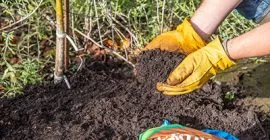
Tumbling leaves should be gathered-up and put to good use and used to make leaf mould. Left to decay, leaves on paths, patios and driveways can turn into a slippery hazard. Clearing autumn leaves from your lawn may be a boring job, but it’s vital for the health of the grass. Leaving them where they fall will starve your lawn of light. It can also cause fungal disease, leading to patchy growth and encouraging moss.
A wide leaf rake, such as the Kent and Stowe 3 in 1 Leaf Rake will make light work of sweeping debris from lawns and the grabber hands help pick them up. While a powered leaf vacuum is ideal for larger expanses of turf.
Gathered leaves can be used for leaf mould, perhaps the best natural soil conditioner or home-made compost ingredient. Hornbeam, oak and beech leaves make the finest leaf mould, but thicker leaves such as horse chestnut and sycamore can be shredded first.
Leaf mould is great for top-dressing containers such as Rhododendrons and Camelias and adding to rockeries and woodland plants.
Leaves can also be added to compost heaps, but avoid forming heaps exclusively from fallen leaves. Mix in other woody brown material such as prunings, along with shredded paper and cardboard, and green matter such as vegetable waste, annual weeds and grass clippings. A healthy heap should contain a good balance of brown and green waste to help it decompose efficiently.
Follow our simple steps to make your own leaf mould: